Automated Branded Stories: Turn Med Spa No-Shows into Instant Bookings with Zero Design Effort
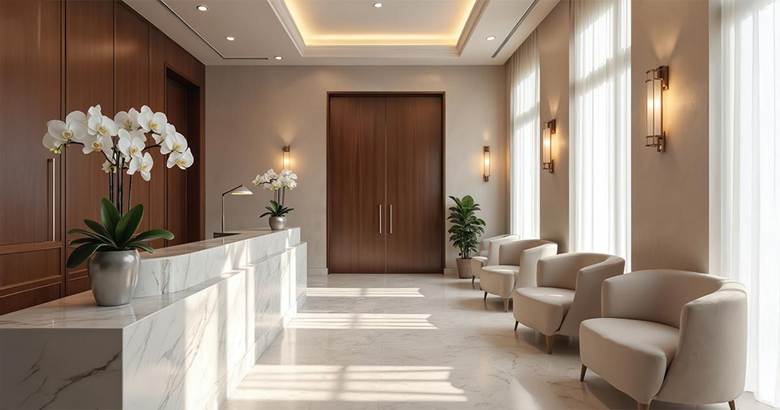
Because the Best Revenue Recovery System Is the One That Works While You’re in a Treatment Room Elegant med spa reception area representing professional client experience and appointment readiness. The medical aesthetics industry is quietly hemorrhaging revenue — and most owners don’t realize the leak is coming from inside the building. No-shows and last-minute cancellations cost U.S. med spas more than $100,000 annually at many mid-to-high volume practices. Not from poor marketing. Not from weak demand. From appointments that were already on the books — clients who confirmed, then vanished. At $200 to $500 per missed slot, the financial damage compounds faster than most owners track. The conventional response — a frantic group text, a last-minute email blast, a rushed Canva graphic — recovers almost nothing. Industry data puts response rates on those channels below 5%. Yet a growing number of high-performing med spa owners are quietly solving this problem in under 60 seconds, without a designer, without a marketing team, and without interrupting a single client interaction. The tool closing that gap is one most practices already have access to: automated branded Stories — professionally designed, compliance-ready, and posted before the disappointment of a cancellation has time to settle. What follows is a breakdown of why the no-show crisis is worse than your numbers suggest, what the most effective recovery strategies actually look like in 2026, and why Instagram and Facebook Stories are outperforming every traditional retention channel — by a factor of two to three. The No-Show Problem Is Costing Med Spas More Than You Think Let’s start with the numbers, because they’re brutal. The medical aesthetics industry sees no-show and last-minute cancellation rates sit at almost 22% in 2026, according to industry benchmarking data across booking platforms. For a busy med spa running 8–12 appointments a day, that’s nearly one in five slots going dark. When you factor in average service prices — Botox, filler, laser treatments, HydraFacials — those empty chairs translate to $200–$500 lost per missed appointment. Run those numbers monthly and you’re looking at an estimated $1,200–$7,500 in unrecovered revenue every single month. Annually, industry estimates put that figure close to $135,000 for many mid-to-high volume practices. That’s not a rounding error. That’s a full-time salary, a new laser device, or the marketing budget you keep wishing you had. And the US medical spa market isn’t slowing down. Valued at an estimated $23–$26 billion in 2026, competition for clients is sharper than ever. The practices winning aren’t necessarily the ones with the best injectors — they’re the ones with the smartest systems. How to Reduce Patient Cancellations at Your Med Spa Before we talk about filling the slots that go empty, it’s worth addressing how to reduce patient cancellations from happening in the first place. Because prevention is always cheaper than recovery. Frustrated med spa receptionist dealing with last-minute client no-shows and empty appointment slots. Build a Confirmation and Reminder Sequence That Actually Works The data is clear: automated appointment reminders can reduce no-show rates by 40–50%, based on findings across healthcare and aesthetic practice management studies. Yet most med spas are still relying on a single confirmation email sent at the time of booking — which clients forget about within 48 hours. An effective reminder sequence looks like this: This sequence alone can cut your no-show rate nearly in half. When clients feel informed and prepared, they show up. 5 Ways to Reduce Patient No-Shows 1. Require a deposit or card on file. Even a $25–$50 deposit dramatically increases show rates. Clients with skin in the game cancel less — and when they do cancel, you keep the deposit. 2. Make rescheduling effortless. Paradoxically, giving clients an easy way to reschedule reduces outright no-shows. When rescheduling feels hard, clients ghost instead of communicating. 3. Create a cancellation policy and enforce it consistently. Post it clearly on your booking page, in your confirmation email, and in your intake forms. Inconsistent enforcement signals the policy doesn’t matter. 4. Send personalized reminders, not generic blasts. Use the client’s name, the specific service they booked, and the name of their provider. Personal messages get read; generic messages get ignored. 5. Follow up after a no-show without shaming. A warm “We missed you — would you like to reschedule?” message sent within an hour of a missed appointment recovers a surprising number of bookings. Make it easy, not awkward. How to Prevent Last-Minute Cancellations with Social Proof and Urgency Even with the best reminder system in place, cancellations happen. Life happens. And when they do, the question shifts from prevention to recovery — and this is where automated branded Stories become your most powerful tool. Beauty brand social media post templates used to automate client engagement and fill open bookings. Why Instagram and Facebook Stories Outperform SMS and Email Most med spas default to sending a mass text or email blast when a slot opens up. It feels logical. But the numbers don’t support it. SMS and email open rates for last-minute promotional messages sit around 4–5%. Instagram and Facebook Stories, on the other hand, generate 2–3x higher engagement than static feed posts and traditional digital outreach, based on platform engagement studies. Stories feel native, urgent, and personal. They show up at the top of the feed. They disappear in 24 hours, which creates natural scarcity. When someone sees a Story that says “We just had a cancellation — Tuesday at 2pm is open for a Sculptra session. Book now — link in bio” — it doesn’t feel like a marketing email. It feels like a friend giving them an inside tip. That’s the difference. What Makes a Branded Story Convert Not all Stories are created equal. The ones that fill slots fastest share a few common characteristics: Automated Branded Stories: The Zero-Design Solution for Busy Med Spa Owners Branded med spa promotional stories showing treatment offers designed to drive instant rebookings. Here’s the challenge most owners face: you know social media matters, you know stories work,
Best Instagram Stories Practices for Med Spas That Actually Convert in 2026
Best Instagram Stories Practices for Med Spas That Actually Convert in 2026 From Passive Viewers to Booked Clients: A Med Spa’s Guide to Stories That Drive Action The “silent killer” of a modern med spa practice isn’t a lack of clinical talent—it’s the empty chair. Within the US med spa market in 2026, currently valued at a staggering $23–$26 billion, the competition for patient loyalty has never been more intense. Many high-end clinics still bleed revenue through the cracks of a broken scheduling system, often unaware of the digital tools available to plug these leaks. Average no-show rates have climbed over 20% this year, leaving busy female owners facing monthly losses of $1,200–$7,500. For a single-location practice, this roughly translates to $134,000+ in annual lost revenue. With each missed appointment costing between $200–$500, leaving a schedule to chance is no longer an option. While traditional reminders are helpful, they lack the psychological grip of Instagram Stories, which generate 2–3x higher engagement in 2026. Why Is the Full-Screen Experience the Ultimate Attention Grabber in 2026? The battle for a patient’s attention in 2026 is won in the first 1.5 seconds of a vertical video. Instagram Stories are psychologically designed to capture interest through a full-screen, immersive experience that eliminates the distractions of a traditional feed. In an era of infinite scrolling, the Story format is the only medium that demands 100% of the field of vision. A user in “Story mode” is in a high-focus state. Unlike the grid, which serves as a static portfolio, Stories function as a real-time “digital consult room.” This immersion allows a med spa owner to showcase the clinical environment, the precision of a needle, or the immediate glow of a facial without the noise of competing posts. How Does the 24-Hour Expiration Create Biological Urgency? The 24-hour expiration of Stories isn’t just a technical feature; it’s a marketing masterpiece. Loss Aversion—the biological fear of missing out on an opportunity—is a primary motivator here. In the context of a med spa, this creates an immediate “buy now” trigger. A follower seeing a $500 filler opening that expires in hours experiences a brain shift from “I should do that eventually” to “I need to claim this now.” This is the secret to how to increase med spa booking rates in 2026. The ephemeral nature of the platform forces a decision, bypassing the “I’ll think about it” phase that kills so many potential bookings. How to Reduce Patient Cancellations at Your Med Spa? A “parasocial” presence is the foundation of modern retention. When a patient sees an injector’s face and clinical results in their full-screen feed every day, a sense of accountability develops. The patient isn’t just canceling an appointment; they are letting down a provider they “know.” This human connection is the strongest deterrent to the “ghosting” culture prevalent in the aesthetics industry. What Are 5 Ways to Reduce Patient No-Shows Using Story Strategy? How to Prevent Last-Minute Cancellations Through Digital Authority? The most successful 2026 practices move from “promoter” to “educator” using the full-screen format. Value-stacking is the primary driver of prevention. When a patient views their treatment as a vital part of their self-care and health regimen, they treat the appointment time with the same respect as a surgery. Can Educational Loops Save the Bottom Line? “Educational Loops”—series of 3–5 Stories explaining the science of a treatment—keep the user engaged in a brand ecosystem. An understanding of the biological benefits of a treatment makes a patient statistically more likely to show up. This is a core effective medical spa marketing strategy for 2026. Digital authority also stems from transparency. In an era of FDA/FTC scrutiny on claims, providing honest, science-backed content builds the trust necessary for high-ticket conversions. Stories allow for a more nuanced conversation about risks and benefits, which is essential for compliance and patient safety. What Are Some Effective Cancellation Policies for Medical Spas? Setting a policy is an exercise in brand positioning. High-end clients in 2026 respect structure and professionalism. If a clinic treats its time as worthless, the patient will too. Why Is “Story-Boarding” the Policy Essential? A 24-to-48-hour notice policy belongs in a dedicated Instagram Highlight for “Clinic Policies” rather than just a website footer. A video of a founder explaining that the policy exists to protect the providers’ time and ensure that waitlisted patients can be accommodated acts as a luxury signal in a $26 billion market. A clear fee—typically $50 to $100 or 50% of the service—filters out “window shoppers” and attracts committed patients. Effective policies in 2026 also include “No-Show Protection” through credit card holds. Explaining the why behind these holds via Stories—focusing on the $134,000+ annual losses clinics face—can soften the blow and build empathy with your patient base. The Internet of Aesthetics: Navigating 2026 Social Trends The internet has transformed the med spa from a local hidden gem into a global content powerhouse. Patients in 2026 are more educated than ever, often entering the clinic with a “wish list” derived entirely from their favorite influencers. This makes the FDA/FTC scrutiny on claims even more critical. Every Story posted is a potential legal liability if not handled correctly. The rise of AI-driven monitoring by regulatory bodies means that “miracle” claims and “guaranteed” results are a thing of the past. Your Stories must be a blend of high-end aesthetics and rigorous clinical compliance. SpotFill: The Hero of Revenue Recovery Busy owners rarely have time for manual content creation. Between managing a team of injectors and overseeing patient care, there are simply not enough hours in the day to design a Canva slide every time someone cancels. A fast-fix that honors the psychological power of the Story is a necessity. How Does SpotFill Turn a Cancellation into a Booking in 60 Seconds? SpotFill is a SaaS platform designed to capture the $4,000–$8,000 monthly currently lost to empty slots. It acts as the “autopilot” for your revenue recovery. When a cancellation hits a booking system (Mindbody, Square, Vagaro),
How High-Performing Med Spas Recover Six Figures in Lost Revenue — Without Adding a Single New Client
The most expensive problem in the medical aesthetics industry isn’t rising competition, shrinking margins, or the cost of acquiring new clients. It’s the revenue that was already earned — already booked, already confirmed — and then quietly disappeared when a client didn’t show up. No-shows and last-minute cancellations are costing U.S. med spas more than $100,000 annually at many mid-to-high volume practices. Not because owners aren’t working hard enough. Not because their services aren’t in demand. Because the systems most practices rely on to recover that revenue — a group text, an email blast, a phone call down a waitlist — were never built for the speed this problem requires. The practices closing that gap in 2026 aren’t doing it by working longer hours or spending more on marketing. They built a recovery infrastructure that operates the moment a slot opens up. What follows is exactly how they’re doing it — and why the financial case for acting now has never been stronger. The True Financial Weight of Running a Medical Spa Before addressing the revenue leak, it’s worth establishing what’s at stake — because the economics of a med spa make cancellations a far more serious problem than they appear on the surface. The Capital Investment Most Owners Never Fully Quantify Opening a competitive medical spa in 2026 requires a level of capital commitment that rivals many mid-size commercial enterprises. Laser and energy-based devices — the treatment workhorses of any serious aesthetic practice — run $50,000 to $250,000 per unit. A fully equipped practice with multiple modalities can have $500,000 to $1 million tied up in equipment before a single operational expense is paid. The overhead that follows is equally demanding. Commercial leases in desirable markets run $5,000 to $15,000 per month. Qualified staff — injectors, laser technicians, patient coordinators — add $20,000 to $60,000 or more in monthly payroll. Stack on CRM subscriptions, EMR systems, booking software, malpractice insurance, medical director fees, product inventory, and ongoing compliance costs, and the monthly operating baseline of a well-run med spa demands a consistently full schedule simply to remain profitable. This is a business built on serious, sustained investment. Which is precisely why allowing cancellations to quietly erode its revenue is not a minor operational inconvenience — it is a direct threat to the financial return on everything already committed. Why Cancellations Hit Med Spas Harder Than Any Other Industry In most retail or service businesses, a missed appointment means lost revenue for that slot. In a med spa, it means something structurally worse: lost revenue against fixed costs that continue regardless. Your injector’s salary doesn’t pause when a client no-shows. Your lease payment doesn’t adjust because three slots went dark on a Wednesday. Your device financing continues whether the laser fires twelve times that day or twice. Every unfilled appointment isn’t just absent revenue — it’s absent revenue measured against a cost base that never stops running. At $200 to $500 per missed appointment, and with industry no-show and cancellation rates running between 17% and 22% in 2026, a practice averaging 10 appointments per day could be losing 2 slots daily. That’s $400 to $1,000 disappearing from the schedule every single day — silently, consistently, and in most cases, almost entirely untracked. How to Reduce Patient Cancellations at Your Med Spa Revenue recovery begins before a slot ever goes empty. The most financially resilient practices in 2026 operate a two-layer defense: prevention first, recovery second. Skipping the first layer forces the second to work harder than it needs to. The Reminder Sequence That Cuts No-Show Rates by Nearly Half Automated appointment reminders can reduce no-show rates by 40–50%, based on findings across healthcare and aesthetic practice management studies. Yet the majority of med spas still rely on a single confirmation message sent at booking — which clients have often forgotten entirely by the time their appointment arrives. A three-touch reminder sequence changes that dynamic entirely: Each touchpoint serves a dual purpose: it reduces no-shows and it gives clients a frictionless path to reschedule rather than simply disappear — which preserves the relationship even when the timing doesn’t work. 5 Ways to Reduce Patient No-Shows Before They Happen 1. Require a deposit or card on file at booking. A $25–$50 hold at the point of scheduling is the single highest-impact policy change most practices can implement immediately. Clients with financial skin in the game cancel less — and when they do cancel, the deposit offsets the cost of the empty slot. 2. Make your cancellation policy impossible to miss. Post it on your booking page, in your confirmation email, in your intake forms, and in your reminder sequence. A policy that clients can claim they never saw is a policy that won’t hold. 3. Make rescheduling easier than ghosting. One-tap reschedule links in every reminder message eliminate the friction that turns inconvenient timing into a full no-show. When rescheduling is effortless, clients communicate. When it feels complicated, they disappear. 4. Personalize every reminder. Client name, specific service booked, provider name. Generic reminders get ignored. Personal ones get read. The difference in show rates between the two is measurable and consistent. 5. Follow up after every no-show within the hour. A warm, non-shaming “We missed you today — would you like to find another time?” A message sent within 60 minutes of a missed appointment recovers a meaningful percentage of those relationships before they go cold permanently. How to Prevent Last-Minute Cancellations from Destroying Your Cash Flow Prevention reduces the problem. It does not eliminate it. And when a last-minute cancellation does hit — with a two-hour window before that slot is gone forever — the difference between practices that recover revenue and those that don’t comes down entirely to the speed and visibility of their response. Why Traditional Recovery Channels Are Failing Med Spas The math on conventional recovery methods is straightforward and discouraging. While SMS and email campaigns have been traditionally used for announcements and promotions, they don’t work